
How to Dominate with a Knight Rush in Age of Empires 2: A Complete Guide
Build orders, Top Knight Rush Civs and Tips on Defending the Knight Rush

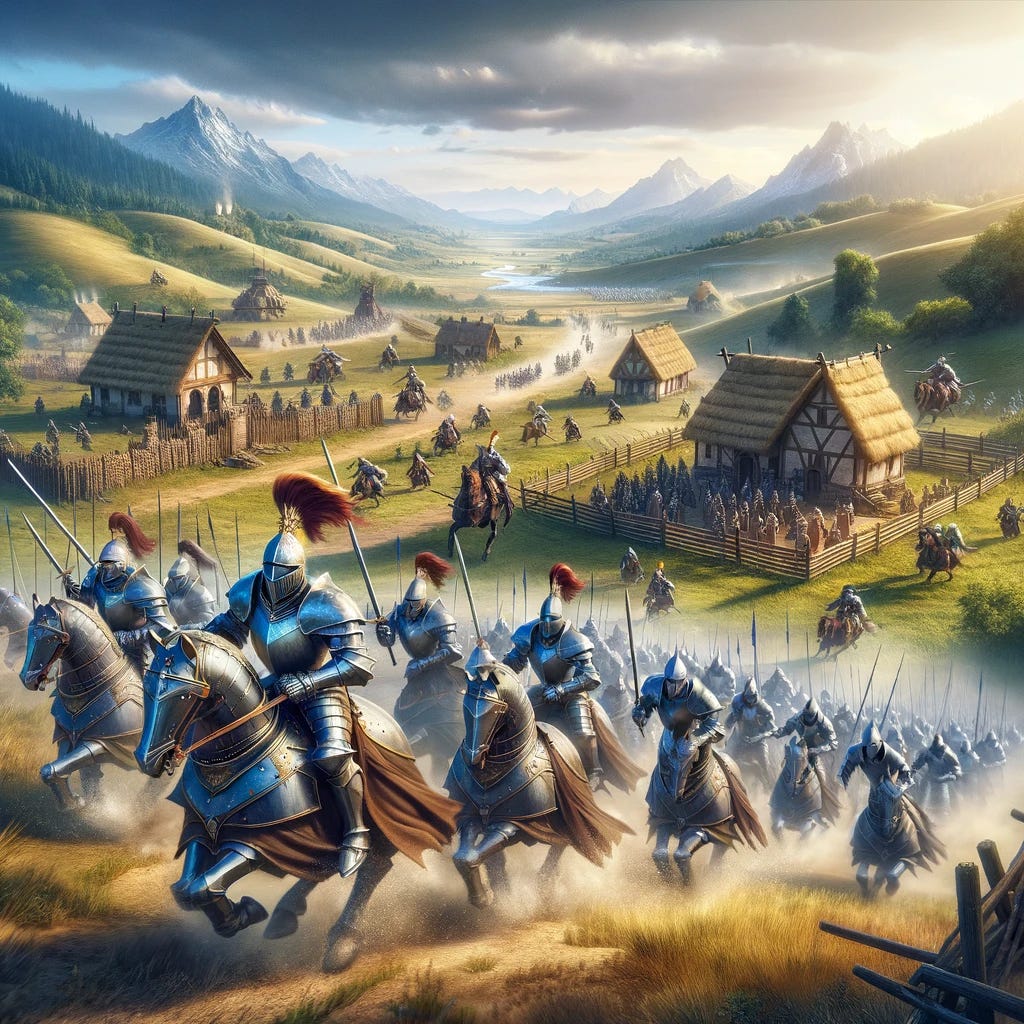
In Age of Empires 2 (AOE2), mastering the art of the Knight Rush can significantly elevate your gameplay, propelling you toward victory. This guide delves into the details of the Knight Rush, its effectiveness, potential risks, optimal build orders, the best civilizations to execute it with, and how to transition into follow-up strategies.
What is a Knight Rush?
A Knight Rush in AOE2 refers to an aggressive military strategy where a player focuses on quickly advancing to the Castle Age to produce Knights from the Stable.
This tactic aims to catch the opponent off-guard, targeting their economy and hindering their progression by attacking villagers and disrupting resource gathering.
Why it Works
The Knight Rush is effective for several reasons. Knights are strong, versatile units with excellent mobility, allowing them to hit multiple targets across the map swiftly. Early in the game, many civilizations struggle to field units that can counter Knights, making this strategy particularly potent against unprepared opponents.
The Knight Rush is especially effective while your opponent is in the Feudal age—as the Knight is significantly more powerful than any Feudal age military unit.
Dangers of a Knight Rush
While powerful, the Knight Rush is not without its risks. It requires a significant investment in resources and a smooth transition through the ages, leaving little room for error.
If you make mistakes with your build order during the Dark and Feudal age can lead to economic setbacks, leading to counter-attacks. Advancing to the Castle age quickly means sacrificing military production in the Feudal age, you are very vulnerable to Federal aggression until you get your Knights out on the field.
Additionally, if the rush fails to inflict enough damage, you may find your opponent has built a significant economic advantage.
Build Orders for a Knight Rush
A successful Knight Rush hinges on an efficient build order:
Dark Age: Focus on gathering food from sheep and boar, with minimal villagers on wood and gold.
Feudal Age Transition: Prioritize advancing to Feudal Age with around 22-24 villagers. Once in Feudal, allocate villagers to gold and ensure you have enough food and wood to advance to Castle Age quickly.
Castle Age: Upon reaching Castle Age, immediately build a Stable (if not done in Feudal Age) and start producing Knights. Research necessary upgrades to enhance your Knights' effectiveness.
Here are some popular Knight Rush build orders, starting with this breakdown from AOE Companion
Dark Age build order for Knight Rush
Queue up as many villagers as possible
Use the first three villagers to build two houses—Then send them to sheep.
Send villages 4-6 to sheep.
Use villager 7 to build a lumber camp
Send villagers 8-10 to wood.
Villager 11 lures the first boar
Villager 12 builds two houses, then send them to berries
Villager 13 builds a Mill by the berries
Villager 14 lures the second boar
Villagers 15-16 go to berries
Villagers 17-18 build farms
Villager 19 builds a second lumber camp on a new tree line
Villagers 20-21 go to the new Woodline
Villager 22 builds a house, then goes to the new Woodline
Villagers 23-24 to wood.
Villager 25 builds a goldmine
Villagers 26-27 mine gold.
Click up to Feudal
Take one villager off wood and build a barracks, then send him back to work
When the sheep are depleted use those villagers to build farms
Queue up two villagers who will go to mine gold in Feudal.
Feudal Age build order for Knight Rush
Take two villagers off wood to build a stable and blacksmith, then send them back to wood
When the two villagers you had queued up are sent to gold, click up to Castle Age.
On your way to Castle Age, take two villagers off of berries, build a second stable and then have them build farms.
Once you reach Castle Age, start building knights and attack enemy villagers.
Best Civilizations for a Knight Rush
Certain civilizations excel at executing a Knight Rush due to their unique bonuses, units, or technologies.
Here are the top five civilizations that excel in a Knight Rush
Franks: Their knights gain +20% HP due to civilization bonuses, providing unmatched durability in combat, essential for early aggression and raids. Their farm upgrades are free and their villagers collect berries faster underpinning a strong economy to support continuous knight production.
Persians: They start with additional food and wood, giving a head start to reach the Castle Age quickly and produce knights sooner. Their knights deal bonus damage against archers, making them effective against common early-game defenses.
Lithuanians: Starting with extra food accelerates their advancement to the Castle Age, and their unique technology grants knights a bonus attack for each relic held, enhancing their striking power significantly.
Berbers: Their cavalry units cost less in the Castle and Imperial Ages, allowing for the mass production of knights at a reduced economic burden, facilitating sustained pressure and map control.
Teutons: Knights from Teutons have additional melee armor, making them more resilient against pikemen and other melee units, thus excelling in direct engagements and enhancing their capability for early to mid-game dominance.
Knight Rush into Economy Boom
The most difficult aspect of executing an effective Knight Rush is transitioning into a long-term strategy.
You might be able to win the game outright with a Knight Rush—especially at lower ELOs—but if you fail to knock out your opponent early you need to press your advantage and build your economy before your opponent has time to catch up.
This video from Morley Games provides a 13:35 super fast castle, into Knight Rush followed by a three Town-Center Economy Boom.
Strategy Overview:
Start Strong: Begin with 6 villagers on sheep, followed by a systematic build-up including boar luring and deer pushing for efficient food gathering.
Wood and Farms: Prioritize wood gathering early on to facilitate a smooth transition into farm production, supporting continuous villager and military unit creation.
Feudal to Castle Transition: Avoid early loom research to maximize resource gathering efficiency, aiming for a swift advancement to the Castle Age.
Knight Production: Upon reaching Castle Age, immediately start knight production enhanced by key technologies like Bloodlines. The initial batch of 5-6 knights is crucial for eliminating enemy troops and securing map control.
Economic Boom: Simultaneously, expand your economy by adding two additional Town Centers as soon as possible, focusing on farm production to support continuous villager and knight production.
The Goals of a Knight-Rush into Eco-Boom Strategy
Map Control: Use the early knight rush to disrupt your opponent's economy and military, securing valuable map territory and resources.
Economic Superiority: Through the 3 TC boom, rapidly grow your economy to outproduce your opponent in both military and resources.
Flexibility: This build order offers flexibility to adapt to various civilizations' strengths, particularly effective with civs like the Franks, known for their cavalry prowess.
Tips on Execution
Resource Management: Efficiently manage your resources, especially wood and food, to ensure a seamless flow of villagers and knights.
Strategic Adjustments: Be prepared to adjust your strategy based on your opponent’s moves. Counter their units appropriately while continuing to expand your economy.
Defensive Measures: While focusing on aggression and economic growth, don’t neglect your defenses. Consider strategic placements for Town Centers and potential defensive structures to protect your economy.
How to counter a Knight rush
Facing a knight rush in Age of Empires 2 can be daunting, but with the right strategy, it's entirely manageable. To effectively counter a knight rush, players should focus on leveraging spearmen, as they are cost-effective and deal bonus damage against cavalry. If you have reached castle age, build a monastery and get a few monks on the field. Monks act as a hard counter to a small number of knights—two to three conversions will stop a Knight Rush dead in their tracks.
Fortifying your base with strategic wall placements and defensive structures like towers can slow down or divert the knight rush, giving you time to muster your forces. It's also crucial to maintain scout activity to anticipate the rush and react accordingly. Developing a balanced economy while preparing your military response ensures you can sustain unit production and upgrades, crucial for overcoming the knight rush and counter-attacking.
Micro-management plays a key role in countering knights. Positioning spearmen effectively, avoiding open combat in favor of choke points, and using hit-and-run tactics can mitigate the knights' mobility and damage output. Furthermore, transitioning to a counter unit composition, such as adding pikemen or camels for civilizations that have access to them, enhances your defensive capability. Advanced players can leverage unique units or technologies from their civilization that specifically counter cavalry.
Lastly, understanding the importance of early game intelligence cannot be overstated. Regular scouting not only reveals the timing of a knight rush but also the opponent’s economy and potential weaknesses. Quick adaptation, such as shifting to more defensive structures or preemptively massing counter units, can turn the tide. Engaging in continuous economic development ensures that even if the initial rush is repelled, you remain competitive in the game. Remember, successful defense against a knight rush often paves the way for a strong mid to late-game presence, leveraging the resources and time invested by your opponent in their failed early aggression.
Try out a Knight rush in your next match
Mastering the Knight Rush in Age of Empires 2 is about timing, precision, and adaptation. By understanding its mechanics, risks, and how to leverage specific civilization strengths, you can turn the tide of battle in your favor. Remember, the key to a successful Knight Rush is not just in the initial attack but in how effectively you can transition into subsequent strategies to secure your victory.